
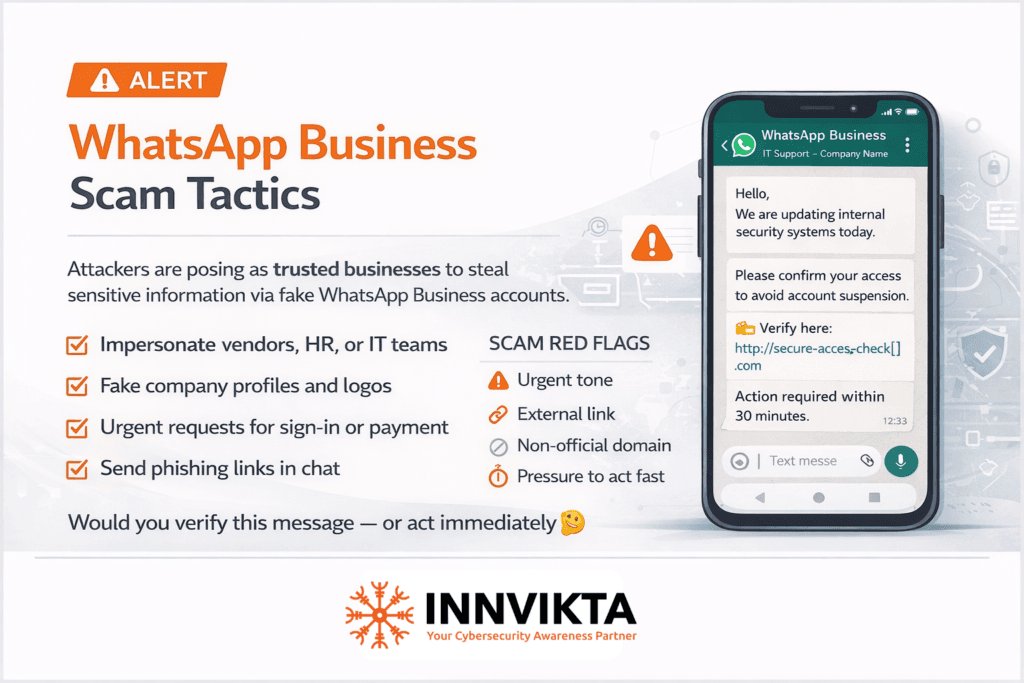
WhatsApp has become a trusted channel for business communication—used for customer support, deliveries, payments, and updates. Cybercriminals are now exploiting this trust through WhatsApp Business message scams, where they impersonate legitimate brands to steal data or money.
How the Scam Works
Attackers pose as banks, e-commerce platforms, telecom providers, or company representatives and send messages that:
- Ask for OTPs or login details
- Request urgent payments
- Share phishing links
- Offer fake jobs, refunds, or delivery updates
These messages often create urgency to push users into quick action without verification.
Common Red Flags
- Unknown numbers claiming to be official businesses
- Requests for OTPs, passwords, or payment
- Suspicious links or shortened URLs
- Urgent messages like “Account blocked” or “Payment required now”
- Poor branding or inconsistent communication
Risks for Individuals & Businesses
- Financial fraud
- Data theft
- Account takeovers
- Brand impersonation
- Loss of customer trust
Employees handling payments and vendor communication are especially targeted.
How to Stay Safe
For individuals
- Never share OTPs or passwords
- Verify messages via official websites or helplines
- Avoid clicking unknown links
- Enable WhatsApp two-step verification
For organizations
- Train employees on social engineering risks
- Use verified business accounts
- Define official communication policies
- Educate customers on safe interactions
If You Receive a Suspicious Message
Do not respond, click, or pay. Block and report the number, inform your organization (if work-related), and report the incident through official cybercrime channels.
Awareness remains the strongest defense.
When a message creates urgency—pause, verify, and act responsibly.