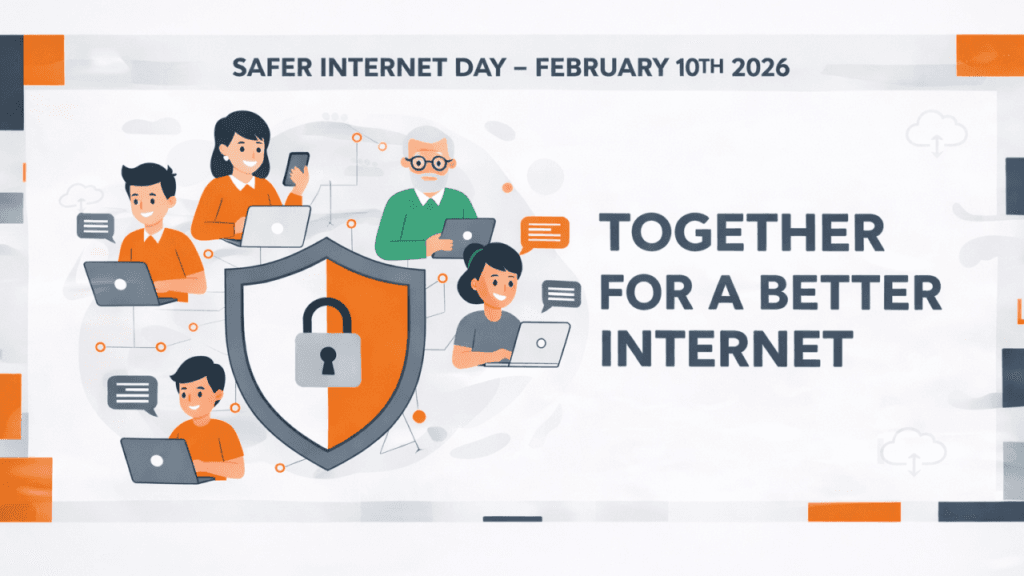
Safer Internet Day – A Reminder That Cybersecurity Starts With You
On Safer Internet Day, conversations around cybersecurity often focus on advanced technologies, sophisticated malware, and complex systems. Yet, some of the most damaging cyber incidents today don’t begin with a breach of infrastructure – they begin with a human interaction.
- A single click on a link.
- A single phone call that sounds legitimate.
- A single reply made in haste.
That’s all it takes.
The Shift in Modern Cyber Attacks
Cybercriminals have evolved. Instead of attacking systems directly, they now focus on people.
This tactic is known as social engineering – manipulating individuals into taking actions that compromise their own security. Unlike traditional cyber attacks, these threats don’t rely on technical vulnerabilities; they rely on trust, urgency, and familiarity.
And they work alarmingly well.
One Click: The Silent Entry Point
Phishing links no longer look suspicious or poorly written. Today, they often:
- Mimic trusted brands and services
- Appear in emails, SMS, WhatsApp, or social media messages
- Create urgency with phrases like “Action required” or “Account at risk”
One click can lead to:
- Credential theft
- Malware installation
- Unauthorized access to personal or financial accounts
The damage often happens before the user realizes anything went wrong.
One Call: When Voices Can’t Be Trusted
Vishing (voice phishing) has become more dangerous with the rise of AI-powered voice cloning.
Attackers now impersonate:
- Bank representatives
- Customer support agents
- Company executives
- Even family members
These calls are designed to sound authentic and urgent, pushing individuals to share OTPs, reset passwords, or transfer funds – all within minutes.
One Reply: When Engagement Becomes Exposure
Sometimes, the risk doesn’t start with clicking a link at all – it starts with replying.
A simple response such as “Yes”, “Okay”, or “I didn’t request this” can:
- Confirm your number or email is active
- Trigger follow-up attacks
- Build credibility for more targeted scams
Engagement signals interest – and attackers take advantage of it.
These threats succeed because they:
- Exploit human psychology, not technology
- Create fear, urgency, or authority
- Target people when they are busy, distracted, or stressed
This is why even well-informed, intelligent individuals can fall victim. Cyber risk is no longer about lack of knowledge – it’s about momentary decisions.
On Safer Internet Day, it’s important to remember that security doesn’t always require complex tools. Awareness and caution go a long way:
- Pause before clicking or responding
- Verify requests through official channels
- Never share OTPs or sensitive details over calls or messages
- Be skeptical of urgency and pressure tactics
- Treat unexpected communications as potential risks
In today’s digital world, cybersecurity is not just an organizational responsibility or an IT concern – it’s a personal life skill.
Because sometimes, all it takes is one click, one call, or one reply to compromise an entire digital life.
This Safer Internet Day, staying secure starts with staying aware.