
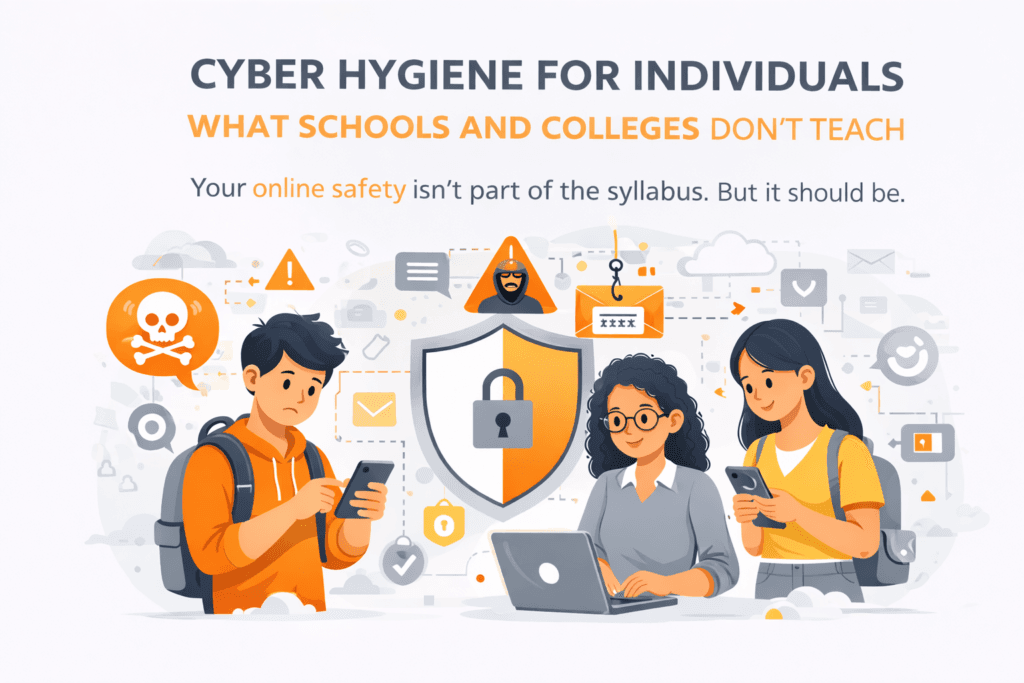
Most people are taught how to read, write, and calculate before they leave school.
Very few are taught how to protect their digital identity — even though it now shapes their education, careers, finances, and personal lives.
From online classes and exam portals to job applications, payments, and social media, our lives are deeply digital. Yet, cyber hygiene — the everyday habits that keep individuals safe online — is rarely part of formal education.And that gap has consequences.

The Hidden Curriculum We Never Received
Schools and colleges focus on academic achievement and technical skills. What’s often missing is guidance on safe digital behavior.
Most individuals are never taught:
- How to recognize phishing or scam messages
- Why reusing passwords is dangerous
- How oversharing online increases personal risk
- What to do after a suspected account compromise
As a result, many people learn cybersecurity the hard way — after something goes wrong.

Cyber Hygiene Is Not About Being “Tech-Savvy”
A common misconception is that cyber safety is only for IT professionals. In reality, cyber hygiene is about everyday decisions, not technical expertise.
It’s about pausing before clicking a link, questioning urgency, verifying requests, and understanding that digital actions have real-world consequences. Even highly educated individuals fall victim to scams because these attacks exploit psychology, not intelligence.

The Risks Start Earlier Than We Think
Students and young adults are often early targets. From fake internship offers and scholarship scams to compromised social media accounts and identity misuse, attackers actively exploit inexperience and trust.
Without early awareness, unsafe habits form quickly — and often continue into professional life.

What Cyber Hygiene Should Include
If cyber hygiene were taught like any other life skill, it would focus on simple, repeatable practices:
- Using strong, unique passwords and multi-factor authentication
- Verifying messages, links, and calls before acting
- Limiting personal information shared online
- Recognizing urgency and fear as common scam tactics
- Knowing how and where to report suspicious activity
These are not advanced concepts — they are foundational.

A Life Skill for the Digital Age
Cyber hygiene deserves the same importance as financial literacy or road safety. In a world where one compromised account can impact education, employment, or finances, awareness is no longer optional.
Until schools and colleges formally address this gap, individuals must take responsibility for learning and practicing safe digital behavior.

Cybersecurity does not start with software or systems.
It starts with people, habits, and everyday choices.
Because in the digital world, staying safe isn’t about knowing everything — it’s about doing the basics consistently.